
Project under way · open archive
Urban art disappears. Grafpin keeps it.
Every painted wall is a work with an expiry date: rain, a fresh coat of paint or a demolition can erase it tomorrow. Grafpin photographs it, anchors it to the exact place where it lives, and preserves it in an archive open to everyone.
- Every piece, anchored to the exact wall where it lives
- An open archive, free and for everyone
01 · Why it exists
A city's memory also lives on its walls.
Graffiti and muralism tell us who we are: our struggles, our neighbourhoods, our humour. But unlike a painting in a museum, nobody was keeping them.
-
It is ephemeral
A work can last years or vanish within a week under a fresh coat of paint. You never know which day will be its last.
-
It is collective memory
Behind every piece there are artists, neighbours and neighbourhood stories. When the wall is painted over, that memory goes with it.
-
Nobody was archiving it
There was no common place to keep and consult the world’s urban art. Grafpin exists to be that place.
Grafpin does not intervene in walls or judge what deserves to be preserved: it records what exists, as it exists, before it stops existing.
02 · The project
A map, an app and an archive that does not forget.
Pin it. Save it. Never lose it. Three pieces working together so that no work is lost without a trace.
-
The living map
A world map where every pin is a real work: browse it by city, by neighbourhood or by wall, discover pieces near you, and watch the urban landscape change over time. Exploring is free and requires no account.
In operation · grafpin.com

The app for documenting
You see a piece, you photograph it, and within seconds it is saved along with the exact place where it stands. Anyone can chronicle the art of their city: no expertise needed, just a phone and the will to look at walls.
Coming soon to app stores
-
The open archive
Everything documented forms a body of open data: artists, researchers, museums, schools and communities can consult it and build on it. Art that came from the street stays everyone’s.
In operation · Open data
03 · How it works
From the street to the archive in four steps.
Documenting a work takes less time than drinking a coffee. It has to be that simple so that no piece is left out.
- 1
You find a piece
A mural on your block, a tag on a bridge, a huge work on the way to the office. If it caught your eye, it deserves a place in the archive.
- 2
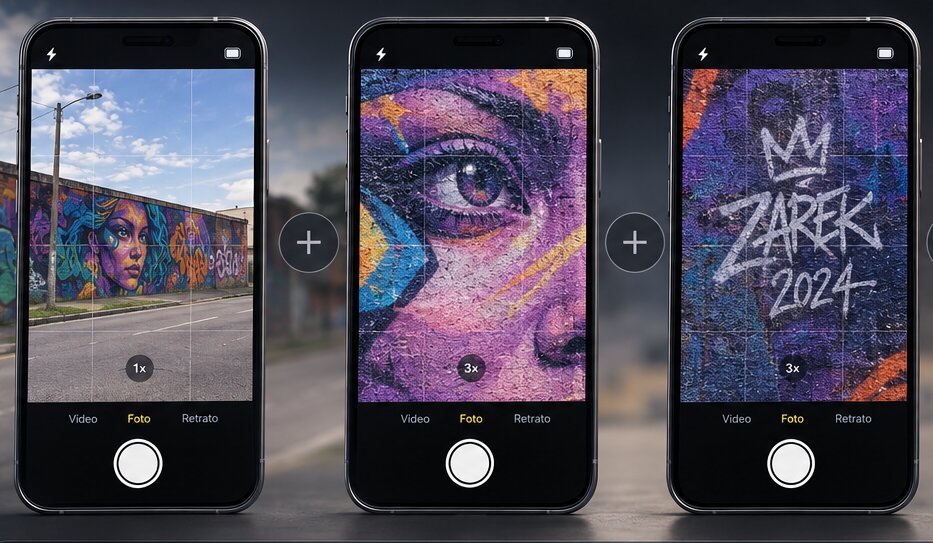
You photograph it
With your own phone, from the app or the web platform. One good head-on photo is enough; you can add more angles if you want.
- 3
It is anchored to its wall
Grafpin saves the exact point where the work lives. Not “somewhere in the city”: on that wall, on that corner, with that view.
- 4
It lives on
Even if the wall wakes up grey tomorrow, the piece is still there for anyone who wants to see it, study it or simply remember it. That is Grafpin: the street, with a memory.
04 · What no one else does
A wall is not one work: it is every work it has ever had.
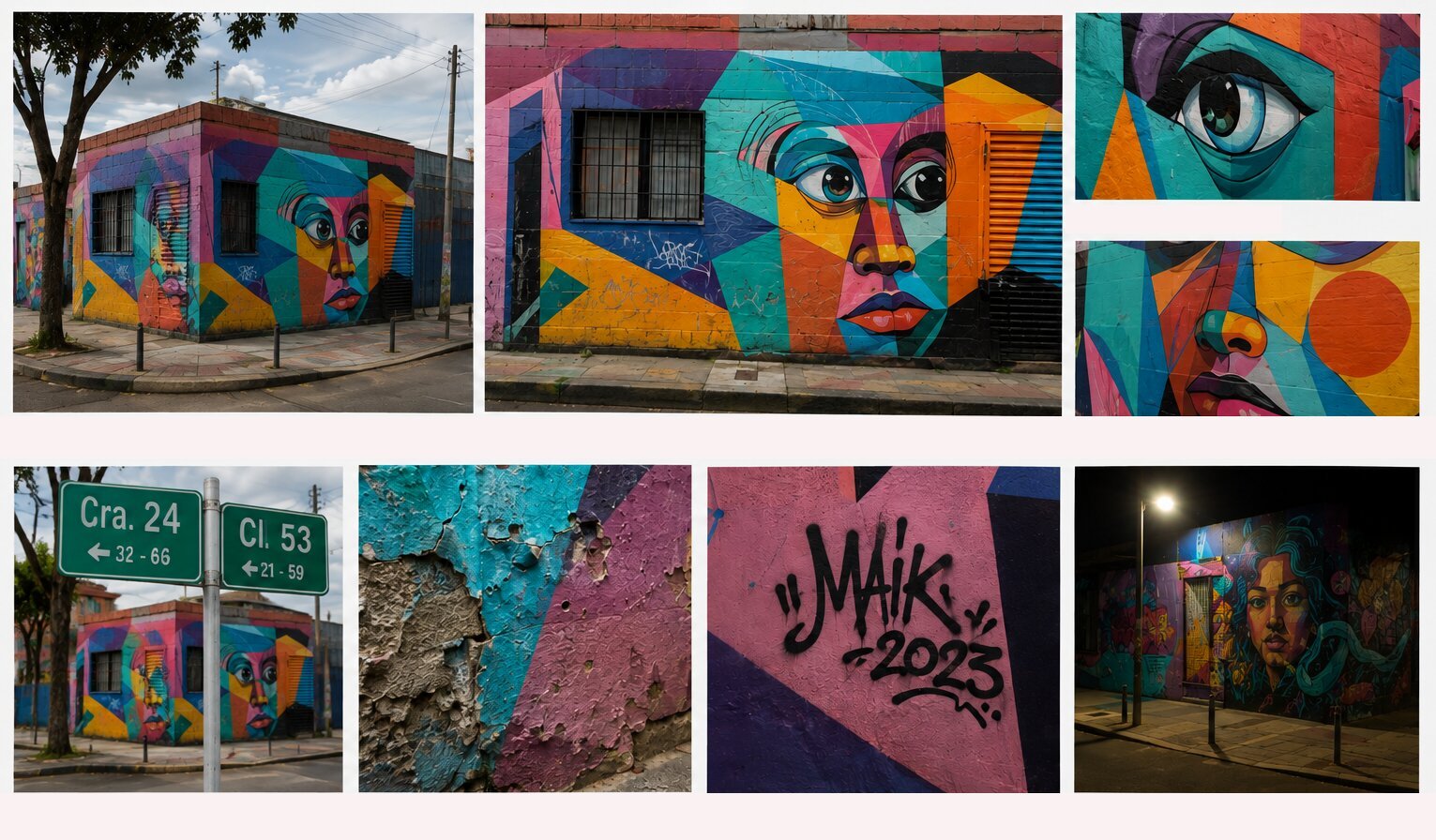
City walls are repainted over and over. Where there is a mural today, there was another one a year ago, and another before that. Grafpin keeps the full history of each wall: you can go back in time and see every layer that existed in that same place.
It is like having a family album of the city: nobody else is keeping those pages, and once lost, there is no way to get them back.
05 · Who it is for
Made for the street, useful to everyone.
Grafpin is free for the communities that feed it. The archive grows with every person who decides a work deserves to be remembered.
-
Artists
Your work leaves a trace even when the wall changes: a living portfolio of everything you have painted, with its place and its story.
-
Neighbourhoods and cities
The visual memory of your neighbourhood, kept by its own people: heritage that no longer depends on the wall still standing.
-
Researchers and museums
An open, orderly source on real urban art, ready to study, exhibit and cite. The archive is freely accessible.
For developers
The archive can also be queried from your application.
Grafpin publishes a read-only API: the archive’s approved pieces, with their location and photograph, as JSON. You request a free key from your account and consume it from your own server. The documentation walks through it step by step.
06 · Research behind it
Not just an app: it is a research project.
Behind Grafpin there is a team studying how the world documents and preserves urban art, with a library of thousands of studies in more than twenty languages.
A global overview of research on graffiti and street art
Under review at an academic journal
Submitted to a specialised journal and currently in editorial review. Once the journal approves publication, we will link the official version here.
Grafpin as a tool for documenting urban heritage
In preparation
It will be written with the data from the first field documentation sessions.
Out of respect for the peer review process, manuscripts are not published on this page while they are under review.
07 · Join in
The walls of your city have a history. Help us keep it.
Want to document the art of your neighbourhood, bring your collective in, or take Grafpin to your city? Write to us: the archive is built by people like you.
- contactenos@excribe.co
- Phones
- The platform
- grafpin.com
- On the web
- web.excribe.co